Binaural Beats: Science vs. Placebo (A 2026 Review)
Binaural beats have been around in the scientific literature since the 1970s, but they've exploded in mainstream wellness culture over the past decade. YouTube channels dedicated to "432 Hz healing frequencies" have hundreds of millions of views. Sleep apps sell "delta wave" audio tracks as guaranteed sleep aids. And influencers promise that 40 Hz gamma waves will unlock your productivity potential.
But does any of it actually work?
The honest answer is: some of it does, some of it doesn't, and the research is more nuanced than either believers or debunkers acknowledge. This article reviews what binaural beats actually are, what the peer-reviewed science says, where the evidence is weak, and how to use them in a way that's supported by data.
What Binaural Beats Actually Are
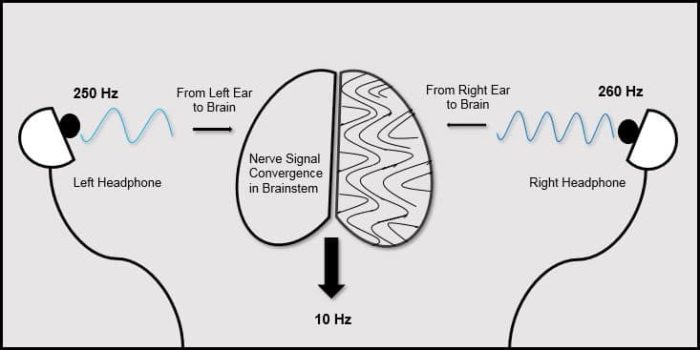
The mechanism is straightforward. When you play a 200 Hz tone in your left ear and a 210 Hz tone in your right ear simultaneously through headphones, your brain perceives a third tone—the mathematical difference between the two. In this case, 10 Hz.This perceived tone is the binaural beat. Your ears don't hear it. Your brain constructs it, the result of the two auditory signals meeting in the brainstem and being processed together.
This is the foundational claim of binaural beat therapy: by choosing which two frequencies you feed into each ear, you can "steer" your brain toward producing brainwaves at the corresponding frequency.
Experience StillKoi for Yourself
Put these insights into practice with guided breathing, meditation, and wellness tools.


The Brainwave Frequency Spectrum
Before evaluating the claims, it helps to understand the five main brainwave categories:| Brainwave | Frequency | Associated State |
|---|---|---|
| Delta | 0.5–4 Hz | Deep sleep, unconscious rest |
| Theta | 4–8 Hz | Drowsiness, light meditation, creativity |
| Alpha | 8–13 Hz | Relaxed alertness, gentle focus |
| Beta | 13–30 Hz | Active thinking, alertness, anxiety |
| Gamma | 30–100 Hz | High-level cognition, focus, learning |
Binaural beat products are typically labelled by target brainwave state: "delta for sleep", "theta for meditation", "alpha for calm focus", "gamma for productivity."
What the Science Actually Shows
Here is where we need to separate the credible from the overblown.#
What Has Genuine Research Support
Anxiety reduction (alpha and theta frequencies)
Several controlled studies show that theta (4–7 Hz) and alpha (8–13 Hz) binaural beats produce measurable reductions in state anxiety. A 2019 meta-analysis in *Psychological Research* examined 22 studies and found significant effects on anxiety, with the strongest evidence for theta-frequency stimulation during rest.
Importantly, these effects appeared over relatively short listening periods (20–40 minutes), and were more consistent than many critics acknowledge.
Pre-operative anxiety
A particularly compelling area of research is surgical anxiety. Multiple clinical trials found that binaural beats at delta and theta frequencies significantly reduced anxiety in patients before surgery—in some studies, performing comparably to benzodiazepines without the side effects. These aren't small, poorly-designed trials; some were randomized controlled studies published in journals like *Anesthesia & Analgesia*.
Attention and focus (gamma and beta frequencies)
The evidence for cognitive enhancement is mixed but not empty. Studies on 40 Hz (gamma) binaural beats have found improvements in working memory and sustained attention in some populations, particularly older adults. Research at MIT has explored 40 Hz stimulation in the context of Alzheimer's research, though this involves flickering light as much as sound.
For healthy adults seeking productivity enhancement, the effects are real but modest—and highly dependent on baseline state and task type.
#
Where the Evidence Is Weak or Absent
Sleep induction
Despite the marketing, binaural beats are not well-supported as a sleep aid. The problem is practical: binaural beats require headphones, which most people cannot sleep in comfortably. The studies that have found sleep benefits typically involve relaxation protocols before bed, not binaural beats playing throughout the night.
For sleep, natural soundscapes like rain and brown noise have stronger and more practical evidence bases.
"Healing" frequency claims
Claims that specific frequencies (432 Hz, 528 Hz, 963 Hz) have special healing or DNA-repair properties are not supported by science. These frequencies carry cultural or pseudoscientific origins with no peer-reviewed backing. Be skeptical of any product making very specific physiological claims beyond relaxation and attention:
Replacing sleep
Some claims suggest binaural beats can produce "sleep-equivalent" rest in minutes. This is not accurate. EEG studies show binaural beats can shift brainwave patterns toward more relaxed states, but this is categorically different from the restorative processes of actual sleep.
The Placebo Problem — And Why It's More Complicated Than It Sounds
A major criticism of binaural beat research is that positive studies often don't adequately control for placebo. If someone believes a sound will reduce their anxiety, they may report reduced anxiety regardless of the mechanism.This is a fair methodological point. But it's also overstated as a dismissal.
First, some binaural beat studies do find measurable neurological changes (EEG power shifts in target frequency bands), not just self-reported changes. This suggests something is happening at a brain level, even if the magnitude is debated.
Second, the placebo distinction matters less for practical applications than critics suggest. If listening to theta-frequency binaural beats helps you calm down before a presentation—whether from entrainment, expectation, or a combination—the outcome is still calming down before a presentation.
The honest characterization is: binaural beats have real, modest effects on relaxation and some aspects of attention, which are likely amplified by expectation effects in real-world use.
How to Use Binaural Beats Effectively
If you want to use them, here's what the data actually supports:Use headphones: Binaural beats require separate frequencies in each ear. Without headphones, you hear both tones simultaneously and the binaural effect doesn't occur.
Match frequency to goal:
- Relaxation / anxiety before an event: Theta (4–7 Hz)
- Calm, focused work: Alpha (8–12 Hz)
- Active focus and attention: Low beta (14–18 Hz)
- Deep cognitive work (if you respond to it): Gamma (40 Hz)
Give it 20–30 minutes: The entrainment effect, if it occurs, takes time. Five minutes is unlikely to produce significant shifts. Studies showing effects typically involve 20–45 minute sessions.
Use it for specific tasks: The evidence is strongest for pre-task or during-task use, not background listening across an entire day.
Pair with a soundscape: Raw sine wave binaural beats are grating for most people. Embedding them underneath nature sounds or ambient music improves the listening experience without reducing the effect. Apps like StillKoi offer this kind of layered approach—where engineered audio elements are embedded in natural soundscapes that are comfortable to listen to over time.
Don't use if you have epilepsy: Rhythmic auditory stimulation has theoretical risks for seizure-susceptible individuals. Consult a physician first.
The Bottom Line
Binaural beats are neither magic nor fraud. The science shows real, modest effects on anxiety and some aspects of attention. The placebo contribution is real but doesn't invalidate the utility. The more extravagant healing claims have no credible backing and should be disregarded.For someone exploring non-pharmacological tools to manage anxiety, support focus, or enhance pre-meditation states, binaural beats are a reasonable experiment—especially theta and alpha frequencies. Go in with calibrated expectations, use headphones, and give it a genuine trial period.
The worst case is that you simply find them relaxing. That's not nothing.
Frequently Asked Questions
Do binaural beats actually work?For anxiety reduction and relaxation, the peer-reviewed evidence is reasonably good—multiple controlled studies show significant effects, particularly for theta and alpha frequencies. For sleep and cognitive enhancement, the evidence is more mixed. Extravagant healing frequency claims are not supported by science.
How long does it take for binaural beats to work?
Most studies showing measurable effects use 20–45 minute sessions. Shorter sessions may produce some subjective benefit, but the brainwave entrainment process takes time to develop. Don't expect results in 5–10 minutes.
Can I listen to binaural beats without headphones?
No — the effect requires separate frequencies played into each ear simultaneously. Without headphones, the two tones mix acoustically in the air before reaching your ears, and the binaural beat is not created. Stereo speakers don't work. Only headphones.
What's the difference between binaural beats and isochronic tones?
Isochronic tones use a single pulsing tone rather than two separate frequencies, and don't require headphones. Some people find them easier to use. The research base for isochronic tones is smaller than for binaural beats, but early studies suggest similar mechanisms.
Are binaural beats safe?
For most people, yes. They're non-invasive audio. The main precaution is for people with epilepsy or a history of seizures — rhythmic auditory stimulation may theoretically trigger episodes in susceptible individuals. Pregnant women and individuals with pacemakers should also consult a physician based on the device, not the audio itself.
---
*This article was reviewed and written by the StillKoi team, committed to honest, evidence-based wellness content.*
*Scientific References:*
*Becher et al. (2015) – Behavioral and neurophysiological effects of auditory stimulation. Frontiers in Human Neuroscience.*
*Garcia-Argibay et al. (2019) – Efficacy of binaural auditory beats in cognition, anxiety, and pain perception: A meta-analysis. Psychological Research.*
*Oster, G. (1973) – Auditory beats in the brain. Scientific American.*
*Wahbeh et al. (2007) – Binaural beat technology in humans: A pilot study to assess psychological and physiological effects. Journal of Alternative and Complementary Medicine.*
The StillKoi Team
We research the neuroscience of rest, focus, and stress recovery to help you build a calmer, more intentional daily life. Every article is grounded in peer-reviewed research and practical, real-world application.

Try StillKoi
Your calm, on demand
Experience personalized wellness with natural sound mixing, guided breathing, and daily rituals.