How to Fall Asleep with Anxiety
Why Anxiety and Sleep Are Neurological Enemies
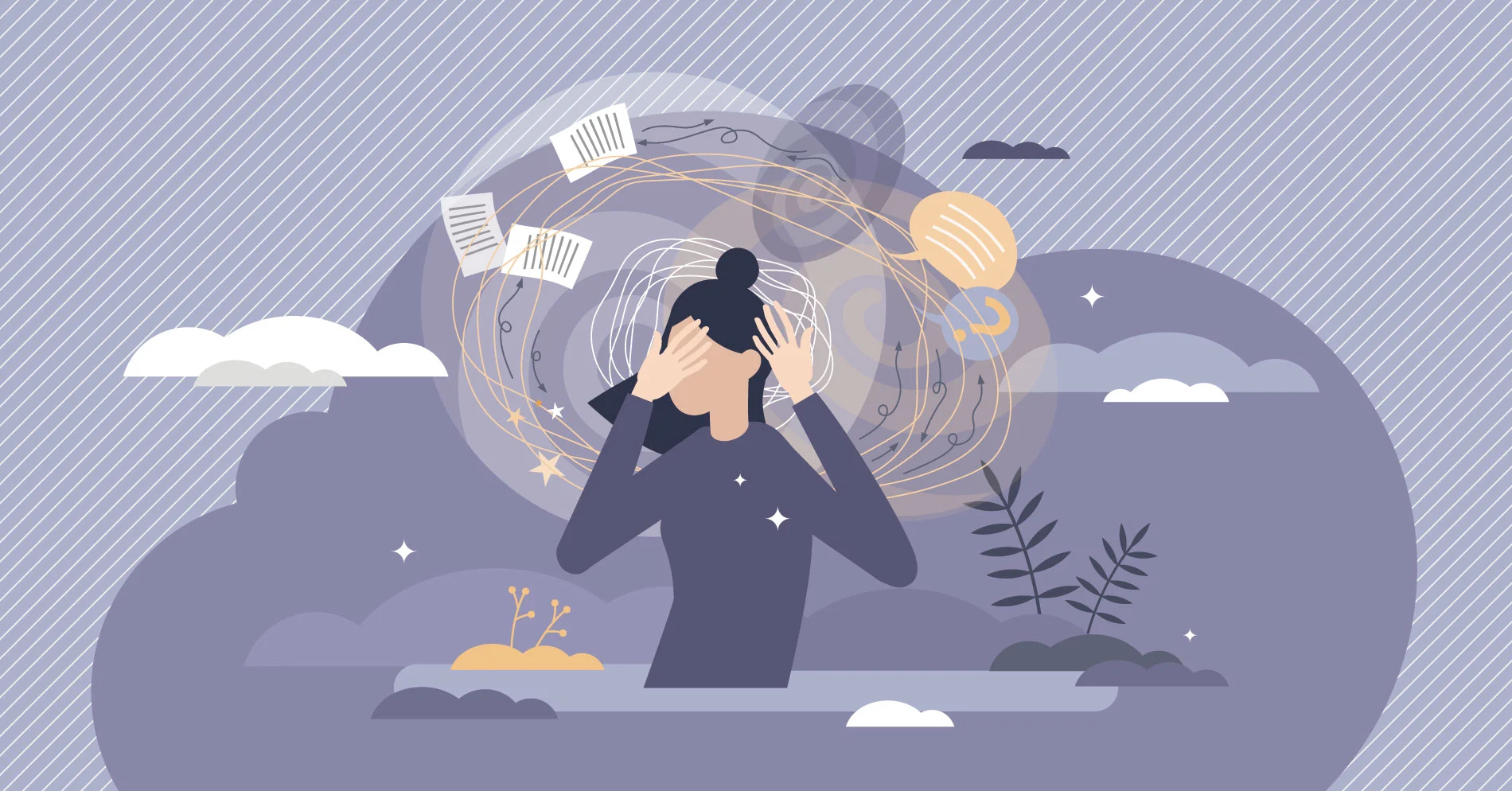
Sleep requires a physiological paradox: you must surrender conscious control of your body while remaining alive. The nervous system accomplishes this through a highly choreographed handoff — parasympathetic dominance gradually overriding the vigilance systems, cortisol falling, core body temperature dropping, and adenosine (the neurochemical that builds sleep pressure) crossing a threshold that makes consciousness unsustainable.Anxiety disrupts this sequence at every stage.
Cortisol spikes during anxious rumination, blocking the natural evening decline. The amygdala — threat-detection center — fires continuously on hypothetical future dangers, keeping the sympathetic nervous system engaged. Core body temperature stays elevated because the muscles remain tensed. And the harder you try to force sleep, the more cognitively active you become — the opposite of what sleep onset requires.
This is not weakness or dysfunction. It is your threat-response system doing its job with too much zeal. The solution is not willpower. It is systematic physiological de-escalation.
Experience StillKoi for Yourself
Put these insights into practice with guided breathing, meditation, and wellness tools.


The Sequence That Works
The following sequence addresses each of the neurological obstacles to sleep with targeted techniques. Work through them in order — the sequence matters because each step removes one layer of physiological resistance.#
Step 1: Reduce Light Exposure — 90 Minutes Before Bed
Melatonin secretion from the pineal gland begins when light levels drop, specifically when short-wavelength (blue) light decreases. Overhead lighting and screens delay this onset by 1–3 hours in standard home environments.
Ninety minutes before your target sleep time, dim all lights substantially and switch to warm-toned or reddish lighting if available. Avoid screens — or use blue light filtering software (f.lux, Night Shift, or a physical filter) at maximum strength.
This sounds too simple to be a technique, but the data is clear: light management is the single highest-leverage sleep intervention available, and most people with sleep anxiety have never fully implemented it.
#
Step 2: Cool the Room — 15 Minutes Before Bed
Core body temperature must drop approximately 1–2°F (0.5–1°C) to initiate sleep. In a warm room, this is physiologically difficult and sleep onset delays significantly.
Set your thermostat to 65–68°F (18–20°C). If you don't control your room temperature, use a fan, open a window, or use cooling bedding. A warm shower or bath 60–90 minutes before bed temporarily raises surface temperature, which triggers compensatory cooling in core temperature — paradoxically helping you sleep faster.
#
Step 3: Physiological Sigh — As You Get Into Bed
The physiological sigh is the fastest known technique for reducing acute anxiety, and it takes 10 seconds.
Double inhale through the nose: inhale fully, then sniff in a second time to fully inflate the lungs (recruiting the air sacs that partially collapse during anxious shallow breathing). Then exhale slowly and completely through the mouth.
One to three physiological sighs dramatically lower heart rate and cortisol within seconds. This works because the long exhale maximally activates the vagus nerve's parasympathetic signaling. It has been studied and popularized by neuroscientist Jack Feldman and further research at Stanford — it is not folk medicine.
Do three physiological sighs when you lie down. This is your signal to your nervous system that the watchfulness can reduce.
#
Step 4: Audio Environment — When Lying Down
In silence, the anxious mind has full possession of your auditory field. It fills the silence with rumination. Providing an external sound anchor disrupts this by occupying the auditory processing centers.
Choose non-patterned, continuous sound: white noise, brown noise, rain, or ocean waves (gentle). Avoid anything with melody, lyrics, or variable rhythm — these recruit the language and pattern-recognition systems you're trying to quiet.
Volume should be sufficient to mask environmental sounds but not uncomfortable — typically 50–65 dB if measurable.
Research from the Journal of Theoretical Biology and subsequent clinical studies has confirmed that steady-state noise improves sleep onset and reduces nighttime waking compared to silence, particularly in anxious populations and urban environments.
StillKoi offers several sleep-specific soundscapes tuned for this purpose: smooth, unchanging textures without the distracting variation that many nature sounds introduce. The brown noise option is particularly effective for anxiety-related sleep difficulties because its lower frequency distribution is less cognitively stimulating than higher-pitched white or pink noise.
#
Step 5: The Cognitive Shuffle — For Thought Interruption
If you're lying in bed and your thoughts are running scenarios, planning conversations, or generating worry — the cognitive shuffle is the technique with the strongest evidence base for interrupting this.
Developed by researcher Luc Beaulieu-Prévost and later popularized by sleep scientist Michelle Drerup at the Cleveland Clinic, the technique works as follows:
Pick a random, emotionally neutral word — any word: "table," "banana," "cloud." Visualize the word for a moment. Then begin to picture a random series of images associated with that word and its letters, changing images as rapidly as you can while keeping them unrelated to your actual concerns.
For example: "table" → picture a table → picture a tablecloth → picture a rabbit on the tablecloth → picture the rabbit running into a field → picture a hot air balloon above the field.
Keep the images shifting rapidly and randomly. The effect: this technique engages the visual cortex and the default mode network in low-stakes imagery, displacing the verbal-linguistic rumination that anxious thinking depends on. The randomness prevents the brain from settling back into familiar worry patterns.
Most people find their mind drifting within two to five minutes of consistent cognitive shuffling. When you find yourself forgetting what you were imaging — you've crossed the threshold.
#
Step 6: Release the Effort
This is the most difficult step, and the one that most advice skips. Sleep cannot be forced. Every effort to "try to sleep" increases arousal. The cognitive goal "I need to fall asleep" creates the exact physiological state incompatible with sleep.
The reframe: your only job is to rest. Not to sleep. Sleep will come when it comes. You have created the optimal conditions (cool room, darkness, sound, physiological sigh, cognitive shuffle). Your task is now to stop interfering.
This is not passive resignation. It's active acceptance — a deliberate choice to release the agenda. What happens when you release the agenda? The nervous system, no longer receiving "be vigilant" signals from the effort, begins the descent.
Paradoxical intention — the deliberate attempt to stay awake — is one of the most validated cognitive behavioral techniques for insomnia (CBT-I). By trying to stay awake (while lying comfortably in the dark), you remove the performance anxiety that prevents sleep onset. Studies consistently show faster sleep onset with paradoxical intention than with direct sleep-effort instructions.
When This Isn't Enough
The sequence above works for situational and mild-to-moderate anxiety-driven sleep difficulties. If you've tried this consistently for two to three weeks without improvement, consider:CBT-I (Cognitive Behavioral Therapy for Insomnia): The gold-standard treatment for chronic insomnia, consistently outperforming sleep medication in long-term outcomes. Available through therapists, structured programs, and digital apps.
Medical evaluation: Anxiety disorders, sleep apnea, and hormonal imbalances all produce sleep difficulties that don't respond to behavioral techniques because the root cause is beyond the behavioral.
Medication consultation: Short-term sleep medications or anxiety medications may help break a severe insomnia cycle while behavioral approaches are established. Discuss with a physician.
---
Frequently Asked Questions
What if I wake up at 3 AM with anxiety and can't get back to sleep?
Early morning awakening is a classic anxiety pattern. If you've been awake for 20 minutes, get out of bed into a dimly lit room. Do the physiological sigh, then do a quiet, low-stimulation activity (not screens) for 20–30 minutes until sleepy, then return to bed. Lying in bed anxiously trains anxious arousal in the sleep context.
Should I take melatonin?
Melatonin is not a sleep drug — it is a circadian cue. It tells your body it's night, not that it's time to sleep. It's most effective for jet lag and circadian disruption. For anxiety-driven insomnia specifically, melatonin alone is typically insufficient because the problem is sympathetic activation, not a circadian timing issue.
My anxiety is about sleep itself — I'm afraid I won't sleep. What do I do?
This is sleep-onset insomnia with performance anxiety, the most common anxiety-sleep pattern. Paradoxical intention (trying to stay awake) is specifically designed for this. Also: remind yourself that one bad night does not produce measurable cognitive damage. The catastrophizing of "I must sleep or tomorrow will be ruined" is itself keeping you awake.
What foods or drinks help with sleep anxiety?
Avoid caffeine after 1 PM — it has a 5–7 hour half-life. Magnesium glycinate (300–400 mg) at bedtime has modest but consistent evidence for improving sleep quality and reducing anxiety. Avoid alcohol — it disrupts sleep architecture even if it helps with initial onset. Chamomile tea has minimal but positive evidence.
Is it okay to use sleep sounds every night permanently?
Yes. Unlike sleep medications, sleep sounds carry no dependence risk and no tolerance development. Many people use them nightly indefinitely with continued benefit. The only consideration: if you travel, ensure you have access to your sound environment (downloaded audio works fine offline).
---
References
Walker, M. (2017). *Why We Sleep: Unlocking the Power of Sleep and Dreams*. Scribner.
Harvey, A. G., & Tang, N. K. (2012). (Mis)perception of sleep in insomnia: a puzzle and a resolution. *Psychological Bulletin*, 138(1), 77–101.
Morin, C. M., et al. (2006). Psychological and behavioral treatment of insomnia: update of the recent evidence (1998–2004). *Sleep*, 29(11), 1398–1414.
Huberman, A., & Feldman, J. (2022). The Cyclic Physiological Sigh. *Cell Reports Medicine*, 3(1).
The StillKoi Team
We research the neuroscience of rest, focus, and stress recovery to help you build a calmer, more intentional daily life. Every article is grounded in peer-reviewed research and practical, real-world application.

Try StillKoi
Your calm, on demand
Experience personalized wellness with natural sound mixing, guided breathing, and daily rituals.