Getting Started with Meditation: A Beginner's Guide That Actually Works
Most people try meditation once, decide their brain is broken, and never go back. The thoughts don't stop. They feel restless, frustrated, or bored within two minutes. They give up concluding the practice "isn't for them."
The problem isn't the person. It's the instruction.
Meditation as it's typically presented makes it sound passive and simple — sit still, breathe, relax. But for a mind that has been operating at full speed all day, this is roughly equivalent to being told to fall asleep on command. The brain doesn't work like that. Understanding what's actually happening neurologically during meditation changes everything about how to approach it.
What Meditation Actually Does to Your Brain
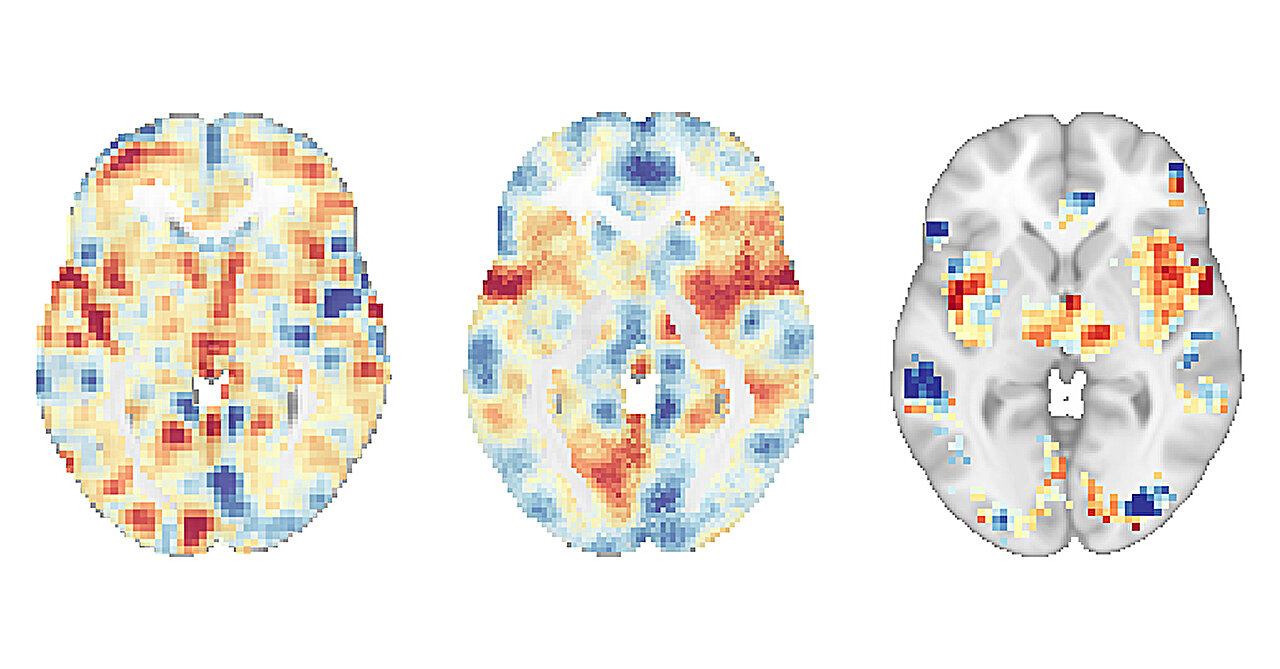
Meditation is not relaxation, though relaxation often follows. It's a training practice for the prefrontal cortex — the region of the brain responsible for attention regulation, emotional control, and executive function.Every time your mind wanders and you notice it has wandered, then choose to return your attention to the breath or chosen anchor, you have completed one repetition of the practice. That noticing-and-returning is the exercise. The wandering is not failure — it is the training stimulus.
This is supported by a significant body of neuroscience. Research from Harvard Medical School found that eight weeks of mindfulness meditation produced measurable increases in gray matter density in the hippocampus (involved in learning and memory) and decreases in gray matter density in the amygdala (involved in stress and fear). This is neuroplasticity responding to a behavioral intervention.
The brain changes. But only if you keep returning to the practice even when — especially when — it feels like nothing is happening.
Experience StillKoi for Yourself
Put these insights into practice with guided breathing, meditation, and wellness tools.


Why Your Brain Resists Meditation at First
The mind that resists meditation is working as designed. The brain's default mode network (DMN) — responsible for mind-wandering, self-referential thought, and rumination — is highly active during rest. When you sit down to meditate, you're attempting to reduce DMN activity, which means suppressing a network that has been dominant and unchallenged for years.This creates resistance that feels like:
- Inability to stop thinking
- Physical restlessness (fidgeting, discomfort, urge to move)
- Boredom or irritability
- Drowsiness (especially in people who are chronically sleep-deprived)
All of these are normal beginner experiences. They are not signs that you're meditating incorrectly — they are what early meditation looks like from the inside. The practice is working precisely because it feels difficult.
Most beginners who quit do so within the first 60–90 seconds of resistance. The entire skill of meditation lives on the other side of learning to stay with that discomfort rather than escape it.
The 5-Minute Method: Where Every Beginner Should Start
Promising yourself to meditate for 20 minutes starting on day one is a reliable way to generate immediate failure and avoidance. Start with five minutes.The method:
1. Sit comfortably — on a chair, cushion, or floor. Spine relatively upright but not rigid. Hands resting in your lap.
2. Close your eyes or lower your gaze to the floor.
3. Take one slow, deliberate breath in through the nose. Exhale fully. This signals the start of the session.
4. Let your breathing return to its natural rhythm. Don't control it. Simply observe the physical sensation of breathing — the air entering your nostrils, your chest or belly rising and falling, the brief pause between inhale and exhale.
5. When you notice your mind has drifted to thoughts, gently redirect attention back to the breath. No judgment. No frustration. Simply return.
6. Repeat for five minutes.
That's it. Five minutes, done consistently, produces the neurological training you're after. The duration matters less than the regularity.
Three Techniques Worth Learning
Breath awareness is the most common starting point, but it's not the only option. Different techniques suit different nervous systems, and knowing your alternatives helps when one approach isn't working.#
1. Body Scan
Instead of anchoring to the breath, you slowly move attention through different parts of the body — from the top of the head, down the face and neck, through the shoulders and arms, the torso, hips, legs, and feet.
This technique is particularly useful for people whose minds race at the expense of physical awareness, or anyone dealing with anxiety or chronic tension. It gives the mind a concrete task rather than the abstract "watch nothing."
#
2. Counting the Breath
Some beginners find breath observation too abstract to maintain. Adding a counting layer helps: inhale, exhale — one. Inhale, exhale — two. Count to ten, then start over. When you lose count (and you will), simply restart from one.
The counting provides a simple cognitive structure that keeps the mind just busy enough to prevent extensive wandering, without requiring any conceptual effort.
#
3. Sound-Based Anchoring
Instead of the breath, you can use sound as your meditation anchor. This is often easier for beginners because sound is continuous and external — it doesn't require the same degree of interoceptive awareness that breath-watching demands.
Choose a neutral ambient sound — rain, a slowly flowing stream, a distant hum — and simply listen. When the mind wanders, return to listening. This approach is particularly effective when paired with a consistent sound environment, and it's one of the principles behind StillKoi's designed soundscapes, which create a stable auditory anchor for meditation and rest.
Building Consistency: The Only Variable That Actually Matters
The research is unambiguous: regularity beats duration. Three minutes of meditation practiced every single day for three months produces more neurological change than thirty-minute sessions practiced sporadically.The most reliable ways to build consistency:
Anchor it to an existing habit. You're more likely to meditate if you consistently do it at the same point in your day, attached to something you already do reliably — immediately after your first coffee, before your morning shower, or during the five minutes before you start work. This is called habit stacking, and it's one of the most effective behavioral tools available.
Remove the decision. Decide once where and when you'll meditate, and don't renegotiate it daily. Every day you have to decide whether to meditate, willpower erodes. When the behavior is non-negotiable, it happens.
Make the environment do some work. Have a specific spot. Keep a cushion or comfortable chair there. Consider pairing it with a consistent scent or sound. Environmental cues are more powerful than intention alone.
What to Do When You "Fail" at a Session
There is no failing in meditation. There is only a mind that wandered more than usual and a mind that wandered less than usual. Both count.The days that feel like terrible meditation sessions — where thoughts continuously intrude, where five minutes feels like fifty, where you spend the entire time frustrated — are often the most valuable. They are the sessions where the brain is working hardest, where the training stimulus is strongest.
Judging a meditation session by how quiet your mind was is like judging a gym workout by how easy it felt. The challenge is the point.
Common Beginner Mistakes That Stall Progress
Trying to stop thinking. Meditation is not thought suppression. You're practicing the ability to observe thoughts without chasing them. Let them pass like clouds — notice them, don't engage with them.Waiting until you feel ready. The feeling of readiness for meditation doesn't precede the practice — it follows it. Start before you feel centered. Start exactly as you are.
Making it a performance. Especially when using apps that gamify streaks or session quality, there's a temptation to optimize for metrics. The only relevant metric is whether you sat down and practiced today.
Meditating only when stressed. This is like exercise — you get the benefits from consistent practice, not from emergency deployment. A daily five-minute practice is far more effective than a 30-minute session on your worst day.
Sound, Silence, and Where to Start
The question of whether to practice in silence or with background sound is genuinely personal. There's no universal answer, but there is useful guidance.For people whose biggest challenge is a racing, resistant mind — especially beginners — some form of neutral ambient sound often helps more than silence. Silence can amplify internal noise, making it harder to maintain any meditation anchor. A gentle, non-intrusive soundscape gives the mind something neutral to return to when thoughts arise, acting as a second anchor alongside the breath.
For people who meditate comfortably and are deepening a practice, gradual reduction of external sound support over time is a natural progression.
The goal isn't silence — it's a stilled mind. How you get there is less important than that you get there consistently.
The Realistic Timeline
Most people notice small but real changes in three to four weeks of daily practice — a slightly greater ability to pause before reacting, a bit more awareness of when stress is building, marginally better quality of sleep. These changes are subtle and easy to dismiss.At eight to twelve weeks of consistent practice, the neurological changes documented in the research begin to manifest more clearly in daily experience. The hippocampus has grown. The amygdala has quieted. The prefrontal cortex has strengthened its regulatory capacity.
This is not a fast process. But it is a reliable one — more reliable than almost any other behaviorally-accessible intervention for stress, attention, and emotional regulation.
Five minutes a day. Start today. Every day matters more than any single session.
Frequently Asked Questions
Is it normal for my mind to keep wandering during meditation?Completely normal, and not an obstacle — it's the practice. The training effect of meditation comes from noticing your mind has wandered and choosing to return your attention. Every wandering-and-returning cycle is one repetition of the exercise. Advanced practitioners still experience mind-wandering; they've simply gotten faster at noticing it.
How long should I meditate as a beginner?
Start with five minutes. Research consistently shows that regularity produces more change than session duration. Five minutes daily for three months outperforms 30-minute weekly sessions. Once five minutes feels comfortable and consistent, gradually extend to 10, then 15 minutes over several weeks.
Do I need a specific posture to meditate?
No. The only functional requirement is a position you can maintain comfortably for the session duration without significant physical pain or distraction. Most people find sitting with a relatively upright spine the most conducive — it avoids the drowsiness associated with lying down, while remaining comfortable. A chair works perfectly well. You do not need to sit on the floor or adopt any particular position.
Should I meditate with or without background sound?
This depends on your nervous system. If silence amplifies your thoughts and makes meditation harder, a neutral ambient soundscape can act as a useful second anchor. If silence is comfortable and grounding for you, use it. Experiment with both approaches and notice the difference in your ability to settle. Apps like StillKoi were built specifically to support sound-based meditation and focus environments.
How do I know if meditation is working?
The benefits of meditation tend to appear first in the periphery of your life, not during sessions themselves. You might notice you reacted less strongly to a frustrating situation. You might realize you've been sleeping slightly better. You may catch yourself ruminating and be able to redirect more quickly. These subtle signs precede the larger changes that appear after two to three months of consistent practice.
---
*This article was reviewed and written by the StillKoi team, focused on evidence-based calm, mindfulness, and nervous system support.*
*Scientific References:*
*Hölzel et al. (2011) – Mindfulness practice leads to increases in regional brain gray matter density. Psychiatry Research: Neuroimaging.*
*Goyal et al. (2014) – Meditation Programs for Psychological Stress and Well-being. JAMA Internal Medicine.*
*Tang et al. (2015) – The neuroscience of mindfulness meditation. Nature Reviews Neuroscience.*
*Lazar et al. (2005) – Meditation experience is associated with increased cortical thickness. NeuroReport.*
The StillKoi Team
We research the neuroscience of rest, focus, and stress recovery to help you build a calmer, more intentional daily life. Every article is grounded in peer-reviewed research and practical, real-world application.
Related Articles

Try StillKoi
Your calm, on demand
Experience personalized wellness with natural sound mixing, guided breathing, and daily rituals.