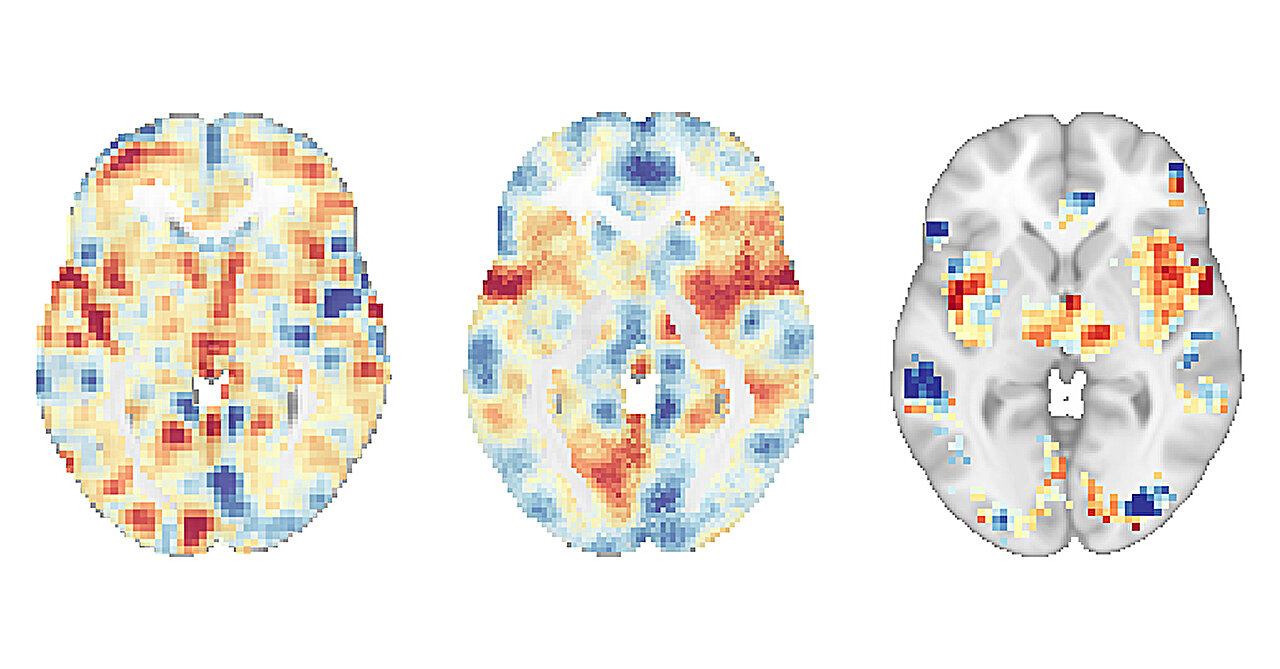
Meditation and Grey Matter: How Mindfulness Physically Rewires Your Brain
For most of the 20th century, the dominant view of the brain was essentially static after early development: the neural architecture you had in adulthood was fixed, gradually declining with age. The discovery of neuroplasticity overturned this entirely. We now know the adult brain continues to physically change — forming new synaptic connections, growing grey matter, pruning unused pathways — in response to repeated experience and behavior.
Meditation may be the most extensively studied intentional driver of positive structural brain change in the scientific literature.
What Neuroplasticity Actually Means
Hebb's Rule (1949) captures the core principle: neurons that fire together, wire together. Repeated patterns of neural activation strengthen the synaptic connections involved. Unused connections weaken through a process called synaptic pruning.This means every repeated experience or practice physically reshapes the brain — strengthening some circuits and weakening others. For most people, much of this process is passive — shaped by habit, environment, and the media we consume. Meditation makes it intentional.
The question neuroplasticity research asks: which specific brain regions and circuits does meditation change? The answers, repeated across multiple independent research groups, are remarkably consistent.
Experience StillKoi for Yourself
Put these insights into practice with guided breathing, meditation, and wellness tools.


The Landmark Research: What MRI Studies Show
The pivotal study came from Sara Lazar's lab at Harvard in 2011, published in *Psychiatry Research: Neuroimaging*. Using structural MRI, researchers compared the brains of long-term meditators to a matched non-meditating group.Key findings:
- Increased grey matter density in the hippocampus — the primary structure for learning and memory consolidation
- Decreased amygdala grey matter — the threat-detection and fear-response center (smaller amygdala correlates with lower baseline anxiety)
- Increased cortical thickness in the right insula — involved in interoception (awareness of body sensations) and emotional intelligence
- Increased grey matter in the posterior cortex — associated with spatial awareness and sensory processing
Crucially, this was not a correlation with lifetime meditation hours (where self-selection effects could confound results). Lazar's group also conducted an 8-week MBSR (Mindfulness-Based Stress Reduction) intervention on meditation-naive participants and found measurable structural changes in this short period.
Eight weeks. Twenty minutes of daily practice.
Strengthening the Prefrontal Cortex
Consistent meditation reliably increases grey matter density and cortical thickness in the prefrontal cortex (PFC) — the brain's executive center, responsible for decision-making, impulse control, emotional regulation, and long-term planning.The PFC is also the brain's primary regulator of the amygdala. When the PFC is strong — meaning when you have sufficient regulatory capacity — the amygdala's threat signals are evaluated, contextualized, and moderated before driving behavior. Low PFC activity relative to amygdala activity is associated with anxiety disorders, impulse control problems, and emotional reactivity.
Regular meditation literally builds the regulator. This is why amygdala hijacks become less frequent and less severe with sustained meditation practice — the PFC is increasingly capable of intercepting and moderating the amygdala signal.
Deactivating the Default Mode Network
The Default Mode Network (DMN) is the brain's "background narrative" — the network active during mind-wandering, rumination, self-referential thinking, and worry about the future. An overly active DMN is strongly correlated with anxiety, depression, and reduced subjective wellbeing.This is not a metaphor — DMN hyperactivity shows up clearly in neuroimaging of people with depression and anxiety disorders.
Meditation, particularly focused-attention practice (attention on the breath), consistently shows reduced DMN activation during practice and, in experienced meditators, at baseline. The structural connectivity between the DMN and executive control networks is also altered — meditators show greater connectivity between the PFC and regions that can inhibit the DMN, meaning they more readily interrupt rumination.
This is one reason why people describe meditation as creating more "space" between stimulus and response — the DMN's habitual narrative is less automatically triggered.
Slowing Brain Aging
A landmark study from UCLA (Luders et al., 2015) compared the brains of 100 meditating and non-meditating adults across age groups. The results showed that long-term meditators had significantly better-preserved grey matter than non-meditators of the same age — a pattern consistent with a protective effect against age-related cortical thinning.The analysis found meditators' brains appeared approximately 7.5 years younger than chronological age by grey matter metrics. The mechanism likely involves multiple factors: reduced chronic stress (and the cortisol-driven hippocampal damage that entails), maintained neural pathway use (use-it-or-lose-it synaptic preservation), and anti-inflammatory effects of regular relaxation responses.
What Type of Meditation Produces Which Changes
Not all meditation is structurally identical in its brain effects. Emerging research distinguishes between:Focused Attention (FA) practice (e.g., breath awareness): Primarily strengthens anterior cingulate cortex (attention monitoring), insula (body awareness), and prefrontal cortex (executive function). Most directly improves sustained attention and impulse control.
Open Monitoring (OM) practice (e.g., open awareness meditation, non-reactive observation): More strongly affects default mode network regulation and metacognitive awareness — the ability to observe your own thoughts without being captured by them.
Loving-Kindness (Metta) practice: Specifically increases insula and anterior cingulate activation, and has been associated with increased feelings of social connectedness, empathy, and reduced self-criticism.
Most StillKoi-supported practices primarily fall in the focused attention category — breath-anchored, sound-anchored, or body-scan approaches — which are the most extensively studied and accessible for beginners.
The Minimum Practice: What Does Research Actually Require?
The encouraging finding from neuroplasticity research is the low threshold for meaningful effects: - Structural changes: Measurable after 8 weeks of 20-minute daily practice - Attention improvements: Reported by practitioners within 2–4 weeks at any frequency - Stress reduction: Significant effects from 10 minutes daily at 5 days per weekThere is no evidence for a minimum session length below which no effect occurs. The finding that emerges consistently: frequency matters more than duration. Ten minutes daily outperforms 70 minutes once per week for structural purposes. Consistency of practice, supported by habit stacking, is the most important variable.
Frequently Asked Questions
Can older adults benefit from starting meditation, or is it too late?Not too late. Multiple studies have found neuroplastic changes in adults over 60 who begin meditation practice. The absolute magnitude of change may be smaller than in younger adults, but the pattern of reduced age-related decline and improved cognitive outcomes is robust across older age groups.
Is guided meditation as effective as unguided for brain changes?
For beginners, guided meditation appears equally effective — the key structural variable is sustained focused attention, which guidance supports as well or better than independent practice for novices. As experience develops, both guided and unguided approaches produce meaningful effects.
I've been meditating for a year but still struggle with anxiety. Am I doing it wrong?
Probably not. Meditation doesn't eliminate anxiety — it changes the brain's relationship to it. The amygdala still activates; the PFC's capacity to moderate and contextualize that activation improves. People with significant anxiety often benefit most from meditation as a complement to therapy (particularly CBT), where meditation supports the implementation of cognitive skills being learned.
Which is better for the brain: meditation or exercise?
Both, and they work on partially overlapping mechanisms. Exercise shows significant neurogenesis (new neuron growth) in the hippocampus, while meditation's effects are more specifically in regulatory and awareness structures. The combination appears additive. If you can only do one, exercise has a slight edge for pure neurological protection; for anxiety reduction and attention training, meditation is more targeted.
---
*This article was reviewed and written by the StillKoi team, focused on evidence-based mindfulness and brain health.*
*Scientific References:*
*Lazar et al. (2005) – Meditation experience is associated with increased cortical thickness. NeuroReport.*
*Hölzel et al. (2011) – Mindfulness practice leads to increases in regional brain gray matter density. Psychiatry Research: Neuroimaging.*
*Luders et al. (2015) – Forever Young(er): potential age-defying effects of long-term meditation on gray matter atrophy. Frontiers in Psychology.*
The StillKoi Team
We research the neuroscience of rest, focus, and stress recovery to help you build a calmer, more intentional daily life. Every article is grounded in peer-reviewed research and practical, real-world application.
Related Articles

Try StillKoi
Your calm, on demand
Experience personalized wellness with natural sound mixing, guided breathing, and daily rituals.