Vagus Nerve & Sound: The Science Behind Humming Yourself Calm
The Nerve That Runs Your Calm Response
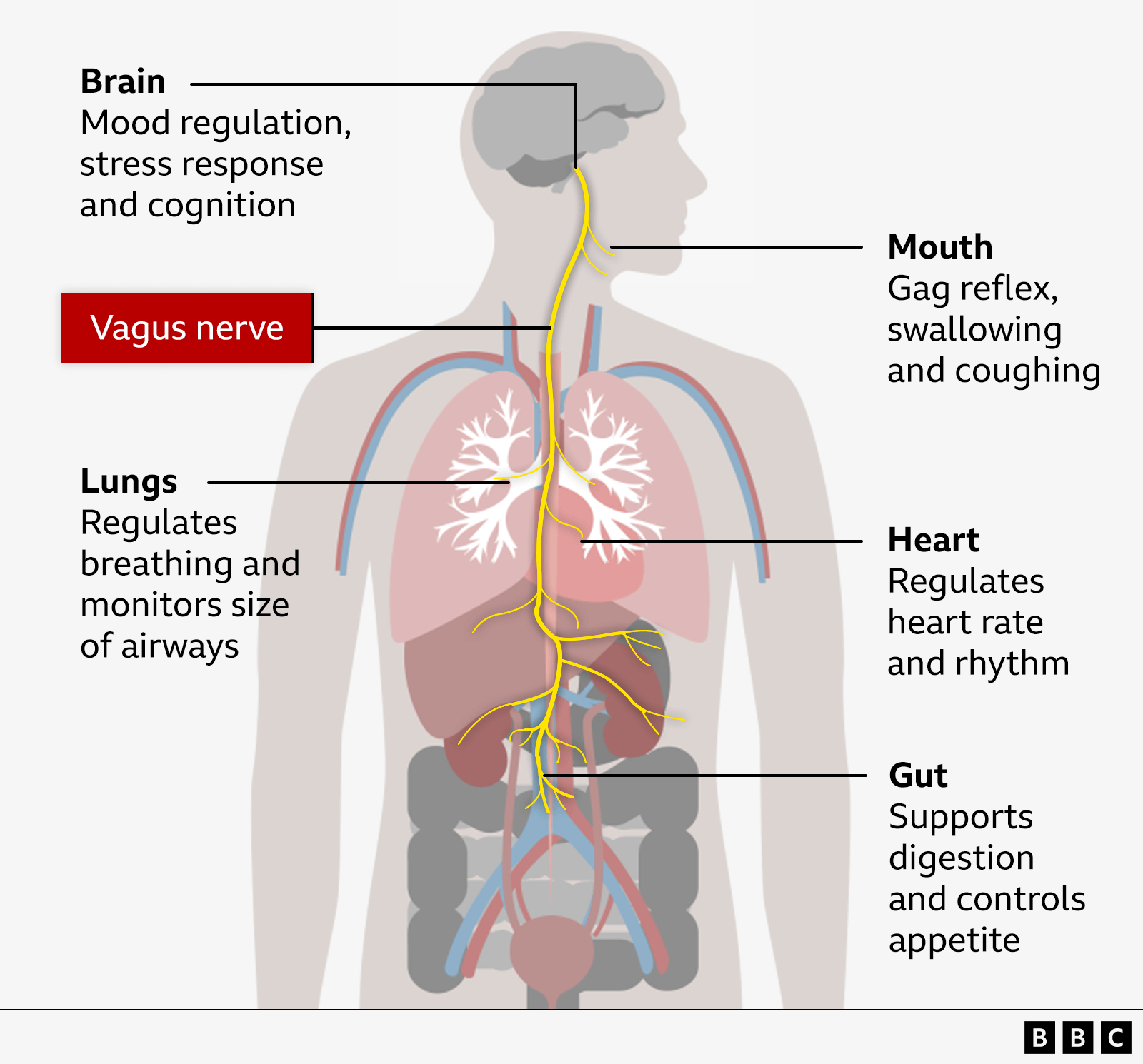
Deep inside your body, a remarkable highway of nerve fibers runs from the base of your skull all the way down through your chest and into your abdomen. This is the vagus nerve — the longest cranial nerve in your body and the primary channel through which your parasympathetic nervous system tells every organ to stand down from alert.When your vagus nerve is well-toned and active, you recover from stress quickly. Your heart rate drops after a scare. Your digestion resumes after anxiety. Your mind clears after overwhelm. When it functions poorly, you stay stuck in fight-or-flight long after the triggering event has passed.
What most people don't know is that sound — specific types of sound, produced both externally and by your own body — is one of the most direct routes to vagal activation. This isn't folk medicine. It's neuroscience, and the mechanism is becoming increasingly well understood.
Experience StillKoi for Yourself
Put these insights into practice with guided breathing, meditation, and wellness tools.


Why Sound Works on the Vagus Nerve
The vagus nerve doesn't just travel through your body silently. It actively listens. Fiber branches of the vagus innervate the muscles of your larynx, pharynx, and middle ear — the entire vocal and auditory apparatus. This means that what you hear and what you produce with your voice directly stimulates vagal activity.Researchers refer to this as the polyvagal pathway, a concept developed by neuroscientist Stephen Porges. According to polyvagal theory, your nervous system uses auditory cues to rapidly assess safety. The prosodic frequencies found in a calm human voice — roughly 500 to 2,000 Hz — signal safety to your nervous system and trigger the social engagement system, which is intimately linked to vagal tone.
This is why a calm voice can physically relax you. It's also why certain music, certain spoken tones, and certain self-generated sounds like humming can reliably shift your physiological state within seconds.
The Humming Effect: Self-Generated Vibration
Humming may be the most accessible vagal exercise that exists. When you hum, you create vibration in your throat and chest that directly stimulates the vagus nerve through two mechanisms:Mechanical vibration: The physical resonance of humming travels through soft tissue to the vagus nerve branches running through the neck and thorax. Research into vagus nerve stimulation (VNS) devices notes that this kind of mechanical stimulation reliably triggers parasympathetic activity.
Exhalation extension: Humming forces a long, controlled exhale. Since vagal tone is highest during exhalation, elongating the exhale through humming essentially prolongs the period of maximum parasympathetic activity with each breath.
A 2021 study published in the *International Journal of Yoga* found that Bhramari pranayama — a yogic humming breathing practice — significantly reduced heart rate and blood pressure in participants after just five minutes. The effect was measurable even in people with no prior meditation experience.
How to Hum for Vagal Activation
The technique matters. Casual humming while cooking is pleasant but not optimally therapeutic. Here's how to hum specifically for vagal stimulation:Step 1 — Posture: Sit upright with your chin slightly tucked. This lengthens the neck and creates better resonance.
Step 2 — Breath: Take a slow, full inhale through your nose for four counts.
Step 3 — Hum on exhale: On your exhale, hum at a comfortable pitch. Feel for the vibration in your chest and skull. The hum should be sustained and steady, not wavering.
Step 4 — Duration: Continue for 10–15 breath cycles. This is roughly three to five minutes and is typically the minimum effective dose.
Step 5 — Monitor: After finishing, sit quietly for one minute. You should notice slower breathing, a sense of heaviness in the limbs, and a slight but perceptible mental clearing.
The pitch of humming doesn't matter as much as the consistency and duration. Experiment to find the pitch where you feel the most vibration in your sternum — this indicates good resonance with the thoracic vagal branches.
Sound Frequencies That Support Vagal Tone
Beyond self-generated voice, external sound environments also influence vagal tone. Research points to several categories:Slow music with a tempo below 60 BPM: Music at slower tempos has been shown to synchronize with respiration, slowing breathing and thereby increasing vagal tone. Music with a tempo of 0.1 Hz (one cycle per 10 seconds) closely matches the natural oscillation frequency of the vagal baroreflex.
Nature soundscapes: Birdsong, in particular, has shown repeated associations with reduced cortisol and improved mood in controlled settings. The prosodic quality of birdsong — varied, harmonic, and within the 500–4,000 Hz range — closely mirrors the frequencies your nervous system uses to assess safety.
Binaural beats in the alpha range (8–12 Hz): Several studies have found that alpha binaural beats reduce anxiety and promote states associated with higher heart rate variability (HRV), a primary marker of vagal tone. The mechanism is thought to involve entrainment of cortical oscillations rather than direct vagal stimulation.
Soft, slow human speech: Recorded guided meditations and sleep stories activate the same vocal prosody detection system as live speech. This explains why many people find spoken meditations more calming than silent meditation — it's not a failure of technique, it's neuroscience.
Heart Rate Variability: Measuring Your Vagal Tone
Heart rate variability (HRV) is the variation in time between your heartbeats. Counter-intuitively, higher variability is healthier — it means your vagus nerve is actively and dynamically regulating your heart. Low HRV is associated with chronic stress, poor recovery, and diminished resilience.You can use consumer devices — Garmin, Apple Watch, Whoop, Oura Ring — or even a free smartphone camera-based app to track your HRV. If you practice humming and calming sound exposure consistently, you should see gradual improvement in your resting HRV over two to four weeks.
Practical Daily Protocol
A sustainable vagal toning practice looks like this:Morning (5 minutes): Bhramari humming — 15 breath cycles before checking your phone. This sets parasympathetic tone before cortisol peaks in the morning.
Work transitions (2 minutes): Between tasks or meetings, two minutes of slow humming resets the nervous system to baseline rather than carrying accumulated stress forward.
Evening wind-down (20 minutes): Environmental sound — nature soundscapes, slow instrumental music, or a spoken meditation — while avoiding bright screens. This shifts the nervous system toward sleep readiness.
StillKoi provides curated soundscapes specifically designed with vagal activation in mind — nature recordings, guided breathing sessions with embedded prosodic voice, and ambient compositions in slow-tempo ranges. Think of it as a sound environment engineered for the nervous system you actually have, not the one that would thrive on anxiety-inducing notification pings.
The Bigger Picture: Why This Matters Now
Chronic low-grade stress is endemic. Sympathetic nervous system dominance — fight-or-flight locked on — is the physiological baseline for a significant portion of the modern adult population. The consequences compound: poor sleep, impaired immunity, cardiovascular strain, cognitive decline, emotional dysregulation.Vagal toning is not a luxury wellness trend. It is corrective physiology. The vagus nerve is the primary mechanism by which your body returns to balance, and sound is one of the simplest, most accessible tools for activating it.
You don't need equipment, a prescription, or a studio. You need the ability to hum, and a few minutes you're probably spending on your phone anyway.
---
Frequently Asked Questions
How quickly can I feel the effects of humming?
Most people notice a perceptible shift — slowed breathing, reduced mental pressure, slight warmth in the chest — within three to five minutes of sustained humming. Deeper physiological changes like improved HRV develop over weeks of consistent practice.
Is there a specific pitch I should hum at?
No specific pitch is required. The most effective pitch is one that creates the most tactile vibration in your sternum and chest. Experiment by sliding your pitch and noticing where you feel the most resonance.
Can I hum while doing other things?
Casual humming while doing dishes or walking has value, but intentional vagal humming — slow, conscious, on extended exhales — is more effective than background humming. Reserve deliberate sessions even if you also hum casually during the day.
Does listening to music have the same effect as humming?
Both work but through different mechanisms. Listening influences vagal tone via auditory prosody detection. Humming adds mechanical vibration and exhale extension. For maximum effect, combine both: listen to calming music while doing slow humming breathing.
How do I know if my vagal tone is improving?
Track HRV using a wearable device or app. Watch for improvements in: sleep quality, speed of emotional recovery after stress, resting heart rate, and subjective sense of calm baseline. Most people notice subjective improvements before wearable metrics catch up.
---
References
Porges, S. W. (2011). *The Polyvagal Theory: Neurophysiological Foundations of Emotions, Attachment, Communication, and Self-Regulation*. W. W. Norton & Company.
Pramanik, T., Pudasaini, B., & Prajapati, R. (2010). Immediate effect of a slow pace breathing exercise Bhramari pranayama on blood pressure and heart rate. *Nepal Medical College Journal*, 12(3), 154–157.
Krygier, J. R., et al. (2013). Mindfulness meditation, well-being, and heart rate variability: A preliminary investigation into the impact of intensive Vipassana meditation. *International Journal of Psychophysiology*, 89(3), 305–313.
Thayer, J. F., & Lane, R. D. (2009). Claude Bernard and the heart-brain connection: Further elaboration of a model of neurovisceral integration. *Neuroscience & Biobehavioral Reviews*, 33(2), 81–88.
The StillKoi Team
We research the neuroscience of rest, focus, and stress recovery to help you build a calmer, more intentional daily life. Every article is grounded in peer-reviewed research and practical, real-world application.
Related Articles



Try StillKoi
Your calm, on demand
Experience personalized wellness with natural sound mixing, guided breathing, and daily rituals.