The Neurobiology of Breathing: How Controlled Respiration Silences Stress
Most of us take breathing for granted — treating it as a simple mechanical background process. But neuroscience reveals that breath is the most direct and accessible bridge between the conscious mind and the autonomic nervous system. By changing how we breathe, we can literally change the neurochemistry of our brains within minutes.
Why Breathing Is Unique Among Body Processes
Your autonomic nervous system regulates dozens of body functions: heart rate, digestion, immune response, hormone release. Nearly all of them are involuntary — you cannot consciously control your digestive enzymes or your inflammatory response.Breathing is the exception. It is both automatic and voluntarily controllable. This bidirectional access is the reason controlled breathing has profound effects on stress and arousal: it is the only direct gateway through which the conscious mind can reach and modulate the stress response.
Every deliberate breath you take is a message to your nervous system about the state of the world.
Experience StillKoi for Yourself
Put these insights into practice with guided breathing, meditation, and wellness tools.


The Vagus Nerve: Your Internal Brake System
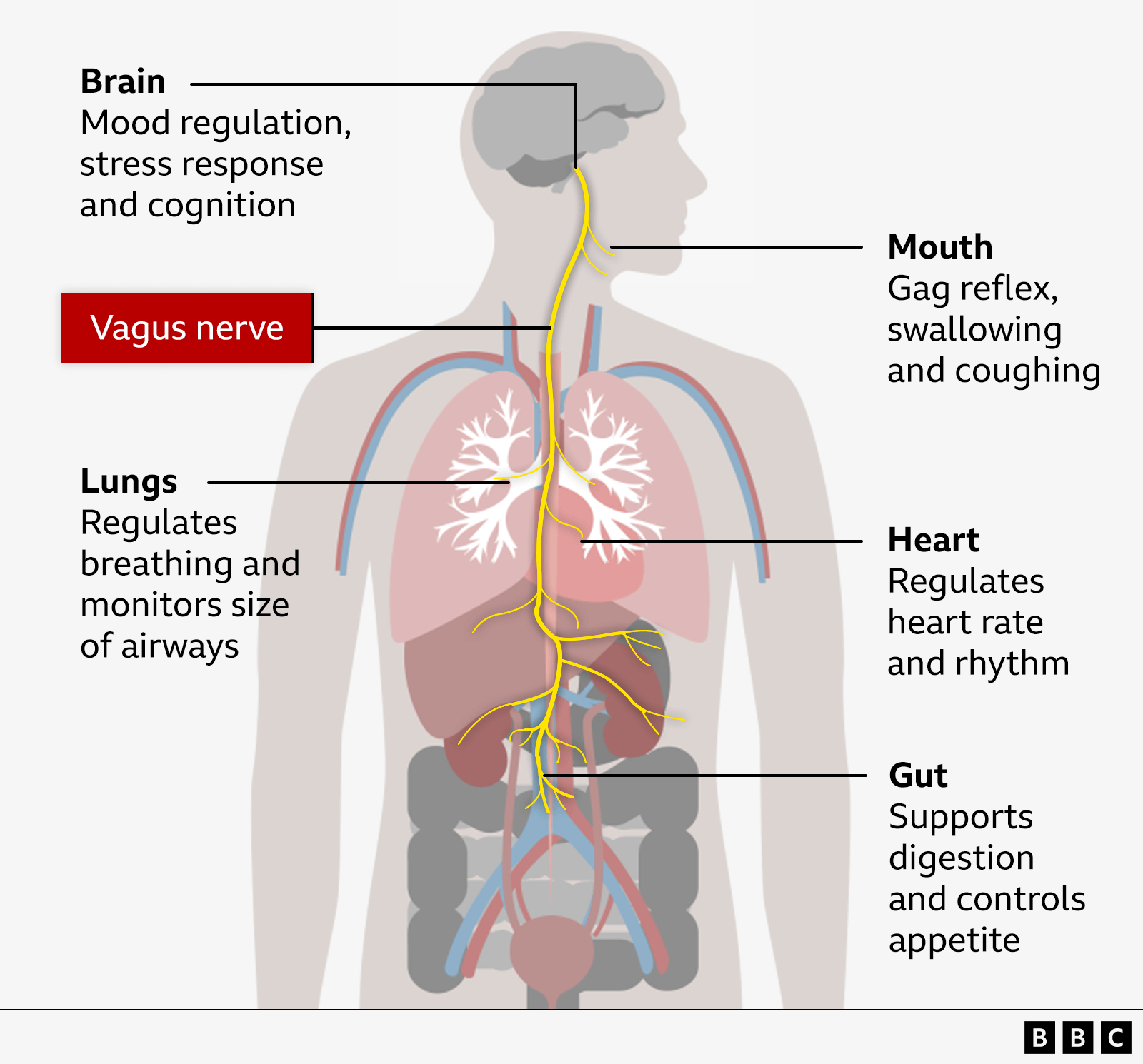
The secret to breath-induced calm lies in the vagus nerve — the longest cranial nerve in the body, running from the brainstem through the heart, lungs, and digestive tract.The vagus nerve is the primary channel of the parasympathetic nervous system (rest and digest). When stimulated, it sends a direct signal to the brain that it is safe to reduce cortisol, slow the heart rate, and shift out of fight-or-flight.
Here is the key mechanism: exhalation directly stimulates the vagus nerve. When you exhale, your diaphragm moves upward, and mechanical pressure on vagal nerve endings sends parasympathetic signals to the brainstem. The longer the exhale, the stronger the signal.
This is why extended exhale breathing works physiologically, not just psychologically — it is a direct stimulation of the relaxation pathway.
Respiratory Sinus Arrhythmia and Heart Rate Variability
Your heart rate naturally rises slightly during inhalation and falls slightly during exhalation. This variation is called Respiratory Sinus Arrhythmia (RSA) — and it's actually a sign of good health. The more pronounced this variation, the more responsive and adaptable your nervous system is.Heart Rate Variability (HRV) measures this variation over time. High HRV is strongly correlated with psychological resilience, emotional regulation capacity, and reduced risk of cardiovascular disease. Low HRV — a relatively rigid heart rate — is associated with chronic stress, anxiety disorders, and burnout.
Controlled breathing directly increases HRV by amplifying RSA. With each intentional extended exhale, you widen the HRV window and train your nervous system toward greater flexibility and resilience. This is measurable in real time with most modern fitness trackers.
The Polyvagal Theory: Why Safety Is the Signal
Stephen Porges' Polyvagal Theory provides a deeper framework for why breath works. The theory describes three states of the autonomic nervous system:1. Ventral Vagal (safe and social): The optimal state — calm, engaged, connected. Associated with deep breathing, low cortisol, social connection.
2. Sympathetic (mobilization): Fight-or-flight. Activated by perceived threat. Heart rate up, breathing rapid and shallow.
3. Dorsal Vagal (shutdown): Freeze and collapse response to extreme threat or overwhelm.
The goal of breathwork is to move the nervous system out of sympathetic mobilization and into ventral vagal safety. Controlled breathing works because it directly signals — through vagal pathways — that the body is safe enough to shift states.
4 Evidence-Based Breathing Techniques
#1. Extended Exhale Breathing (Most Versatile)
Method: Inhale for 4 counts through the nose. Exhale for 6–8 counts through the nose or mouth.Why it works: The extended exhale is a sustained vagal stimulation. This is the foundational breath for stress relief and sleep preparation.
Best for: General anxiety, winding down after a stressful day, pre-sleep transition.
---
#
2. 4-7-8 Breathing (Deep Reset)
Method: Inhale for 4 seconds. Hold for 7 seconds. Exhale for 8 seconds with a gentle "whoosh" sound.
Why it works: The breath hold allows CO2 to accumulate, which triggers a parasympathetic response. The long exhale then amplifies vagal tone. Dr. Andrew Weil at the University of Arizona has described this as one of the most powerful single interventions for acute anxiety.
Best for: Acute stress, panic-adjacent anxiety, sleep onset.
---
#
3. Resonance / Coherence Breathing (5.5 BPM)
Method: Breathe at exactly 5–6 breaths per minute — approximately 5 seconds in, 5 seconds out. No holds.
Why it works: This resonance frequency maximizes HRV and RSA. At 5.5 breaths per minute, the cardiovascular and respiratory systems enter a state of synchrony — "coherence" — that is strongly associated with reduced anxiety, improved focus, and emotional regulation. Studied extensively by the HeartMath Institute.
Best for: Sustained daily practice, HRV improvement over time, performance under pressure.
---
#
4. Physiological Sigh (Quickest Reset)
Method: Take a full inhale through the nose. Without exhaling, take a second smaller inhale to fully inflate the lungs. Then a long, complete exhale through the mouth.
Why it works: The double inhale re-inflates collapsed alveoli (small air sacs in the lungs) that close during shallow breathing, maximizing the surface area for gas exchange and rapidly reducing CO2. Research from the Huberman Lab at Stanford (Balban et al., 2023) found the physiological sigh produced faster real-time stress reduction than any other breathing technique studied.
Best for: Immediate acute stress, a quick reset mid-day, before a difficult conversation.
When and How Often to Practice
Morning: Coherence breathing (5 minutes) after waking anchors parasympathetic tone for the day. Pairs well with morning light exposure as a two-component circadian anchor.Before stressful events: Physiological sigh (2–3 repetitions) for immediate nervous system reset.
Evening transition: Extended exhale breathing (10–15 minutes) as the primary tool for moving from the wired-but-tired state to sleep readiness. This is where StillKoi soundscapes pair synergistically — slow breathing combined with gentle ambient sound provides dual-channel nervous system regulation.
During acute stress: 4-7-8 breathing or physiological sigh as a rapid intervention.
The cumulative effect of consistent practice matters. Research shows that practitioners who use breathwork daily for 8 weeks show measurable structural improvements in HRV even at baseline — meaning the baseline state of the nervous system shifts, not just the momentary response.
Integrating Breathwork with Sound for Maximum Effect
An important finding in breathwork research: the effect is amplified when sensory context supports the shift. Attempting extended exhale breathing while in a bright, stimulating environment — with notifications firing and screens active — requires the nervous system to fight against environmental signals.Pairing breathwork with a designed sonic environment accelerates the shift. Low-complexity ambient sound removes the need for the auditory cortex to monitor the environment for threat signals. With that monitoring load removed, the vagal signals from breathing meet less resistance. The dual input — respiratory signal and acoustic safety signal — is consistently more effective than either alone.
This is the principle behind StillKoi's guided breathing sessions: sound design and breath guidance working together to support what the nervous system already wants to do.
Frequently Asked Questions
Does breathing really change my brain chemistry?Yes, measurably. Controlled breathing increases parasympathetic tone, reduces circulating cortisol, lowers heart rate, and has been shown in neuroimaging studies to reduce amygdala activation. These are not subtle effects — they are physiologically significant changes that occur within minutes.
How long do I need to breathe before I feel calmer?
Most people notice a meaningful shift within 2–5 minutes of consistent extended-exhale breathing. The physiological sigh produces effects in under 60 seconds for acute stress. Sustained practice over weeks compounds the baseline effect.
Is there a wrong way to do breathing exercises?
The most common mistake is breathing from the chest rather than the diaphragm. Place one hand on your chest and one on your belly — the belly hand should rise first and move more. Chest-dominant breathing fails to stimulate the diaphragm-vagus pathway as effectively.
Can breathing exercises replace medication for anxiety?
Breathwork is a powerful adjunct to anxiety treatment, not a replacement for professional care. For clinical anxiety disorders, it works best alongside therapy — particularly approaches like CBT. For everyday stress and subclinical anxiety, it is often sufficient as a standalone intervention. Consult your doctor or therapist about your specific situation.
Why do I sometimes feel dizzy during breathing exercises?
Mild dizziness early in extended exhale breathing usually reflects a temporary shift in CO2/O2 balance. It passes quickly. If dizziness is significant or persistent, slow the breathing slightly — you may be exhaling too fast or too completely. If symptoms continue, consult a healthcare provider.
---
*This article was reviewed and written by the StillKoi team, focused on evidence-based nervous system regulation.*
*Scientific References:*
*Porges (2011) – The Polyvagal Theory. W.W. Norton.*
*Balban et al. (2023) – Brief structured respiration practices enhance mood and reduce physiological arousal. Cell Reports Medicine.*
*Lehrer & Gevirtz (2014) – Heart rate variability biofeedback: how and why does it work? Frontiers in Psychology.*
*Jerath et al. (2006) – Physiology of long pranayamic breathing. Medical Hypotheses.*
The StillKoi Team
We research the neuroscience of rest, focus, and stress recovery to help you build a calmer, more intentional daily life. Every article is grounded in peer-reviewed research and practical, real-world application.
Related Articles

Try StillKoi
Your calm, on demand
Experience personalized wellness with natural sound mixing, guided breathing, and daily rituals.