Why Your Mind Races at Night (Even When You're Tired)
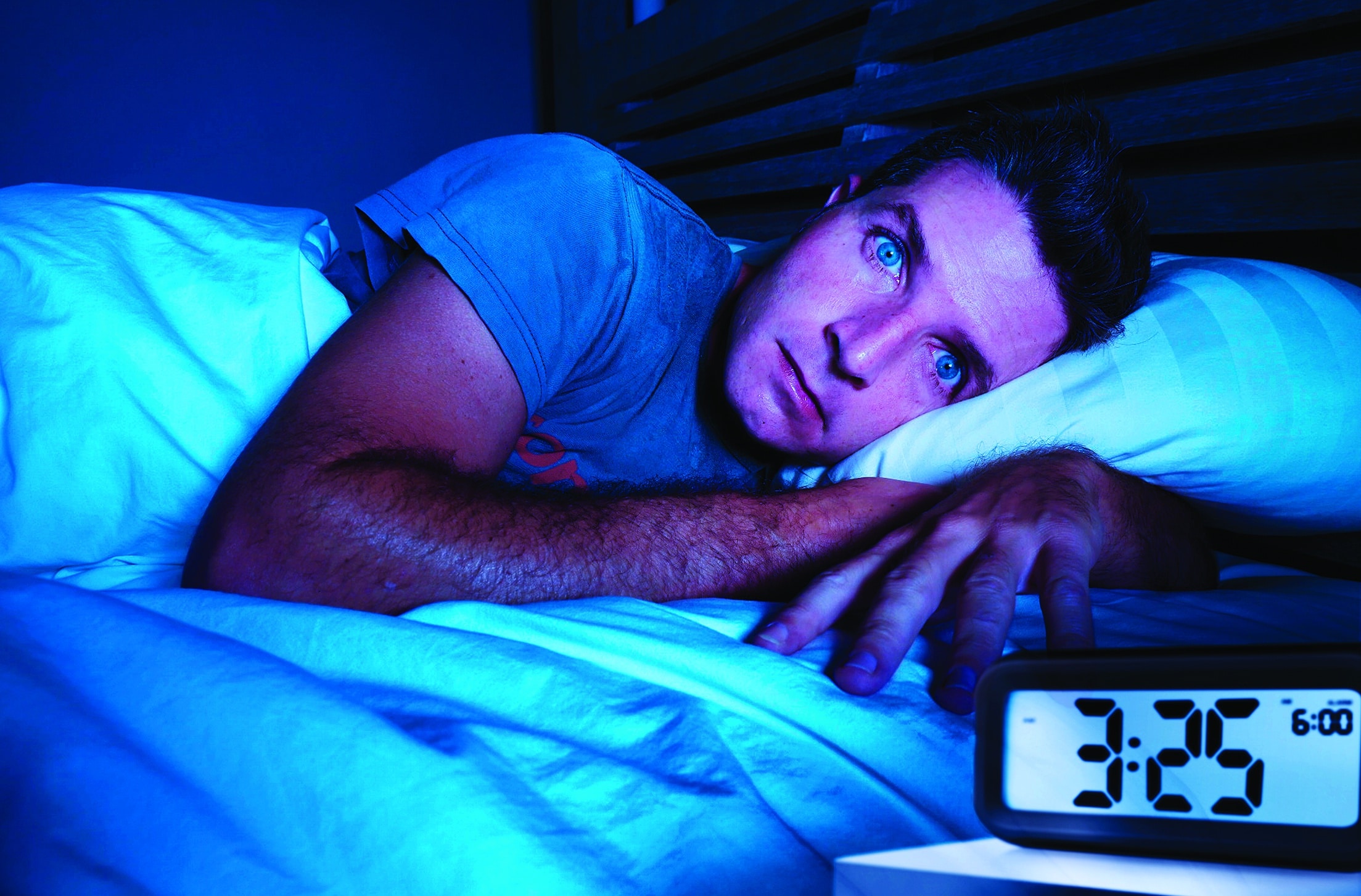
You finally lie down after a long day. Your body feels heavy, your eyes are tired, but suddenly your mind turns on. Thoughts replay conversations, plan tomorrow, or spiral into worries you had managed to avoid all day. The harder you try to sleep, the wider awake you feel.
This experience is one of the most common complaints sleep researchers encounter — and one of the most frustrating, because effort makes it worse. Understanding exactly why this happens, at the neurological level, is the first step toward doing something genuinely effective about it.
Your Brain at Night Is Not “Shutting Down”
During the day, your brain is continuously occupied with tasks, inputs, social interactions, and decisions. This external stimulation keeps the default mode network (DMN) suppressed — the network responsible for self-referential thinking, memory replay, future planning, and rumination.At night, external stimulation drops sharply. For many people, this silence doesn't bring calm — it removes distraction. The DMN, no longer suppressed by external demands, becomes highly active. The brain fills the quiet with internal content: unresolved problems, social rehearsals, memories, and anxious anticipations.
This is why racing thoughts frequently begin the moment the lights go off. You weren't thinking about that work email at 8pm because the dinner dishes were keeping the DMN occupied. At 11pm, there's nothing left to do that job.
Experience StillKoi for Yourself
Put these insights into practice with guided breathing, meditation, and wellness tools.


The Cortisol and Norepinephrine Problem
Even if your day is officially over, your stress hormones may not be. Cortisol follows a natural diurnal rhythm — peaking in the early morning (the cortisol awakening response) and declining through the afternoon into evening. For individuals under chronic stress, this decline is often blunted: cortisol remains elevated well into the evening when it should be low.Norepinephrine, the neurotransmitter responsible for alertness and the arousal system, has a similar pattern in stressed individuals. When psychological or work-related stress accumulates across the day, the arousal system remains activated into the night — not because anything threatening is happening, but because the nervous system's reset process has been disrupted.
In this hormonal environment, falling asleep is genuinely difficult regardless of how tired the body feels. Physical fatigue and mental arousal can coexist — and often do. This is the exact mechanism behind the frustrating experience of being exhausted but unable to sleep.
The Blue Light and Circadian Disruption Factor
Light is the most powerful signal the brain uses to set the circadian clock. Blue-wavelength light — emitted heavily by phones, tablets, and laptop screens — directly suppresses melatonin production by signaling to the suprachiasmatic nucleus (the brain's master clock) that it is daytime.Even 20–30 minutes of bright screen exposure after 9pm can delay melatonin onset by 60–90 minutes in susceptible individuals. The brain then arrives at the moment you try to sleep still in a hormonal state that resembles daytime: melatonin low, cortisol not yet fully suppressed, arousal system partially active.
Racing thoughts in this context aren't a sleep disorder — they're a rational response to a brain that is hormonally in "afternoon mode" while its owner is demanding it perform "night mode" behavior.
Why Forcing Silence Often Backfires
A common response to racing thoughts is to eliminate all stimulation — dark room, complete silence, no movement. For some people, this helps. For many others, it makes the problem significantly worse.In silence, the brain becomes hyper-aware of:
- Internal thoughts and their urgency
- Physical sensations (heartbeat, breathing, restlessness)
- The passage of time—which feels slower when you're anxious
- The frustration of not sleeping, which creates secondary arousal
This heightened awareness in silence fuels anxiety and mental chatter in a feedback loop that reinforces wakefulness. The brain interprets silence as a lack of environmental safety cues and maintains vigilance rather than releasing it.
For many people with anxiety-driven racing thoughts at night, a neutral sound environment provides better conditions for mental quieting than pure silence.
The Role of Adenosine: Why Sleepiness Isn't Enough
Adenosine is a sleep-promoting molecule that accumulates in the brain during waking hours and is cleared during sleep — the biological basis of sleep pressure. When adenosine is high (after many hours awake), you feel sleepy.But high adenosine alone does not guarantee sleep onset. If the arousal system is sufficiently activated — by stress, cortisol elevation, light exposure, or anxiety — it can override the sleep pressure signal. The brain, despite being biochemically sleep-deprived, stays alert.
This is why the subjective experience of "being tired but unable to sleep" has a precise biological explanation. It is not a contradiction or a personal failing. It is two competing systems — sleep homeostasis and arousal — with arousal currently winning.
How the Brain Actually Calms Itself
Neuroscience shows that the nervous system calms most effectively through gentle regulation, not suppression. Forcing stillness on an aroused brain rarely works. Working with the body's own regulatory mechanisms does.Effective strategies with genuine research support:
1. Extended exhalation breathing. The exhale phase of the breath cycle activates the parasympathetic nervous system through the vagus nerve, reducing heart rate and promoting the shift from sympathetic (alert) to parasympathetic (rest) dominance. A 4-count inhale followed by a 6–8 count exhale, practiced for 5 minutes, produces measurable reductions in physiological arousal. The neurobiology of breathing explains this mechanism in detail.
2. Low-complexity soundscapes. Giving the attention system something external and neutral to monitor — rain, a flowing stream, distant thunder — reduces the brain's tendency to turn inward and generates rumination loops. The auditory cortex needs only mild engagement to prevent the DMN from dominating. This is a fundamentally different mechanism from distraction; it's providing a gentle perceptual anchor.
3. Writing worries down before bed. A 2018 study published in the *Journal of Experimental Psychology* found that writing a to-do list of upcoming tasks before bed significantly improved sleep onset time compared to journaling about completed tasks. Externalizing cognitive content (putting it on paper) reduces working memory load and the sense of urgency that keeps the arousal system active.
4. Consistent pre-sleep routines. The circadian system learns from behavioral consistency. A predictable sequence of low-stimulation activities in the 30–60 minutes before bed — dim lights, calm audio, light reading, no screens — trains the nervous system to associate these cues with sleep onset. Over weeks, the routine itself begins to promote physiological wind-down.
5. Progressive muscle relaxation. Systematically tensing and releasing muscle groups from feet to face reduces peripheral muscle tension — a reliable component of the physical arousal state. This bottom-up approach to relaxation works through the body rather than trying to manage the mind directly.
A Practical Pre-Sleep Protocol
For people with persistent racing thoughts at night, a structured approach is more effective than hoping to relax organically. Here's one based on the above mechanisms:60 minutes before sleep:
- Dim lights (below 200 lux, or switch to red/amber bulbs)
- No screens, or use glasses that filter blue wavelengths if unavoidable
- Write a brief to-do list for tomorrow and a quick note of any open cognitive loops (things you're worried about forgetting)
30 minutes before sleep:
- Begin calm ambient audio (rain, brown noise, or a designed soundscape)
- Do 5 minutes of extended exhale breathing
- Light, low-cognitive reading if desired (nothing emotionally stimulating or screen-based)
At bedtime:
- Continue the ambient audio
- Progressive muscle relaxation: tense each body area for 5 seconds, release for 10 seconds, working from feet upward
- If thoughts arise, acknowledge them briefly without engagement: “I see that thought, I can return to it tomorrow.” Then redirect to the sound or the breath.
Apps like StillKoi are designed to support exactly this sequence — providing consistently available, carefully textured soundscapes for the pre-sleep transition, rather than a random shuffle of sleep sounds.
When Racing Thoughts Indicate Something More
For most people, nighttime racing thoughts are situational — connected to periods of high stress, poor sleep habits, or excessive screen use. They respond well to the approaches above over one to three weeks.If racing thoughts at night have been happening consistently for more than two months regardless of external circumstances, or if they're accompanied by significant daytime anxiety, persistent low mood, or functional impairment, this may indicate an anxiety disorder or related condition worth discussing with a physician or therapist. Cognitive Behavioral Therapy for Insomnia (CBT-I) has an exceptionally strong evidence base for chronic insomnia with racing thoughts and is the first-line clinical recommendation above sleep medication.
The Takeaway
Racing thoughts at night are not a willpower problem. They are the predictable result of the brain's default circuits activating when external suppression drops — compounded by cortisol that hasn't cleared, melatonin that hasn't risen, and an arousal system that doesn't know the workday is over.The solution isn't forcing stillness — it's providing the nervous system with the right signals to transition: external anchors for attention, parasympathetic activation through the breath, reduction of stimulation before bed, and consistent environmental cues for sleep.
Calm at night isn't something you achieve through discipline. It's something the nervous system returns to, when given the conditions it needs.
Frequently Asked Questions
Why does my mind race only at night?During the day, external tasks and inputs suppress the brain's default mode network. When stimulation drops at night, the DMN becomes active and fills the quiet with internal content — replay, worry, planning. Combined with cortisol levels that may still be elevated from daytime stress, this creates the conditions for nighttime overthinking.
Does anxiety cause racing thoughts at night?
Anxiety and nighttime racing thoughts are closely related, but either can drive the other. Anxiety keeps the arousal system active, which delays sleep onset and increases rumination. Repeated nights of poor sleep from racing thoughts can itself generate sleep anxiety. The amygdala hijack response is often involved in the emotional intensity of nighttime worry cycles.
Is it better to get up if I can't sleep or stay in bed?
If you've been awake for more than 20–25 minutes with no sign of sleep approaching, leaving the bed for a low-stimulation activity (gentle reading, calm audio in dim light) and returning when drowsy is generally more effective than prolonged frustrated wakefulness in bed. Staying in bed during extended wakefulness can condition the brain to associate the bed with alertness rather than sleep.
Do breathing exercises really help with racing thoughts?
Yes, and this is one of the more robustly supported techniques. Extended exhale breathing directly activates the parasympathetic nervous system through vagal stimulation, reducing physiological arousal. This works independently of whether your thoughts "feel" less urgent. Start with the breath — the mind often follows the body's state. See our guide on the neurobiology of breathing for the full mechanism.
---
*This article was reviewed and written by the StillKoi team, focused on evidence-based calm, sleep, and nervous system support.*
*Scientific References:*
*Buckner et al. (2008) – The Brain's Default Network. Annual Review of Neuroscience.*
*Goldstein et al. (2019) – Cortisol Dynamics and Sleep Onset.*
*Scullin et al. (2018) – The effects of bedtime writing on difficulty falling asleep. Journal of Experimental Psychology: General.*
*Chang et al. (2015) – Evening use of light-emitting eReaders negatively affects sleep. Proceedings of the National Academy of Sciences.*
The StillKoi Team
We research the neuroscience of rest, focus, and stress recovery to help you build a calmer, more intentional daily life. Every article is grounded in peer-reviewed research and practical, real-world application.
Related Articles



Try StillKoi
Your calm, on demand
Experience personalized wellness with natural sound mixing, guided breathing, and daily rituals.