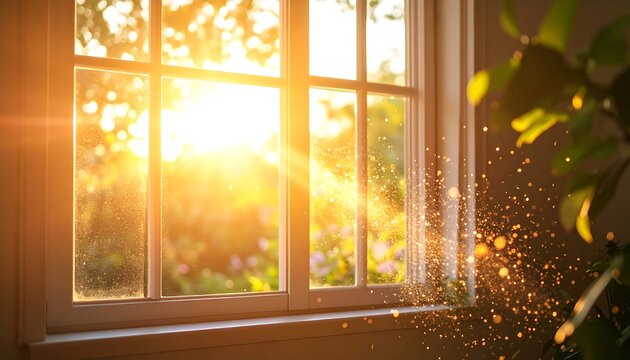
Circadian Rhythms: Why Morning Light is the Secret to Better Sleep
Your body has an internal 24-hour clock known as the circadian rhythm. This clock governs your body temperature, metabolism, hormone release, immune function, and cognitive performance across the day. When it's well-calibrated, you wake energized, sustain alertness through the day, and fall asleep easily at night. When it's disrupted, everything suffers — including sleep quality, mood, focus, and physical health.
The good news: the circadian clock is remarkably responsive to environmental signals. A few targeted behaviors — done consistently — can calibrate or recalibrate it within days.
The Master Clock: The Suprachiasmatic Nucleus
The circadian clock is not a metaphor. It is a physical structure: the suprachiasmatic nucleus (SCN), a small cluster of roughly 20,000 neurons in the hypothalamus, directly above the optic chiasm.The SCN is wired directly to specialized retinal cells called melanopsin-containing intrinsically photosensitive retinal ganglion cells (ipRGCs). These cells are not involved in image formation — they exist solely to detect ambient light and report it to the SCN.
When bright light (particularly short-wavelength blue light) hits these cells, they signal the SCN to "start the clock" for the day. This triggers a cascade: cortisol rises, body temperature starts climbing, and the brain's alerting systems activate. At the same time, the SCN sets a 12–14 hour timer after which melatonin will be released — signaling the body that it's time to sleep.
Everything depends on that initial morning light input.
Experience StillKoi for Yourself
Put these insights into practice with guided breathing, meditation, and wellness tools.


Morning Light: The Most Powerful Circadian Anchor
Research from Andrew Huberman's lab at Stanford, as well as the National Institute of General Medical Sciences, confirms that viewing bright light within the first 1–2 hours of waking is the single strongest circadian anchor available. The effect is strongest with actual sunlight — which has a broad, high-intensity spectrum that indoor lighting cannot fully match even at equivalent lux levels — but even on overcast days, outdoor light is significantly more powerful than indoor lighting.The morning light pulse does two things:
1. It causes a healthy cortisol spike — the cortisol awakening response — that promotes alertness, mood, and motivation for the day
2. It sets the melatonin timer: approximately 12–16 hours after this light exposure, melatonin begins rising, creating the biological onset of sleep pressure
Without this accurate morning "anchor," the circadian clock drifts. Each day without a clear light signal creates increasing misalignment between internal biology and the environmental clock. This is why shift workers and people with irregular schedules suffer disproportionate rates of sleep disorders, metabolic disruption, and mood disorders — they are living in chronic circadian misalignment.
Practical protocol:
- Step outside within 30–60 minutes of waking
- No sunglasses for the initial 5–10 minutes (UV doesn't need to enter the eye; visible spectrum does)
- Even cloudy outdoor light (10,000+ lux) far exceeds indoor lighting (200–500 lux typically)
- If you wake before sunrise, use bright indoor light (a 10,000 lux light panel) and then get outside at first light
Evening Light: The Melatonin Suppressor
Conversely, artificial light in the evening — particularly the short-wavelength blue light emitted by LED screens, overhead lighting, and smartphones — hits the same retinal cells and signals the SCN that it's daytime. This suppresses melatonin production.A study by Lockley et al. (2003) found that even dim room light could suppress melatonin production in many individuals. Blue-light-rich screens routinely delay sleep onset by 1–2 hours and reduce slow-wave and REM sleep quality even after sleep is achieved.
Evening light protocol:
- Begin dimming lights after sunset, especially overhead lights
- Use warmer-spectrum bulbs (incandescent tone, 2,700K) in the evening
- Place screens below eye level (more of the melatonin-suppressing effect comes from overhead angles)
- Blue-light filtering apps (Night Shift, f.lux) provide modest help but are not equivalent to reducing light intensity
- The hour before bed: candlelight-level dimness is the ideal
Temperature: The Underestimated Circadian Signal
Light gets most of the attention, but core body temperature is a co-regulator of circadian biology. The body's core temperature needs to drop 1–2°C to initiate and sustain deep sleep.During the day, body temperature rises with activity. In the evening, it naturally begins to fall (part of why you may feel sleepy in a cool, comfortable room). Accelerating this fall supports sleep onset:
- A warm shower or bath 1–2 hours before bed paradoxically accelerates cooling — the vasodilation (widening of blood vessels near the skin) radiates heat outward, and after you exit, core temperature drops more rapidly
- A cool bedroom (65–68°F / 18–20°C) is consistently associated with faster sleep onset and better slow-wave sleep
- Avoid intense exercise within 2 hours of bed — it significantly raises core temperature and can delay sleep onset by 1–2 hours
Caffeine Timing and Adenosine
Caffeine works by blocking adenosine receptors — the receptors that register sleep pressure buildup. This is why caffeine delays sleep onset. The half-life of caffeine is 5–7 hours, meaning half of a 2 PM coffee is still blocking adenosine receptors at 9 PM.The circadian implication: caffeine timing affects the adenosine signal that the circadian system uses to drive sleep pressure. Consuming caffeine in the final 6–8 hours before bed disrupts the sleep-pressure signal that the circadian system is trying to amplify at night.
The commonly recommended cutoff of "no caffeine after 2 PM" for a 10 PM sleep time is based on this half-life calculation — adequate for most people, though fast metabolizers can go later and slow metabolizers should cut off earlier.
Social Jetlag: The Hidden Circadian Disruptor
Most people sleep on a different schedule on weekends than weekdays — staying up later and sleeping in. Researchers call this social jetlag: a regular, self-imposed phase shift equivalent to traveling 1–2 time zones every weekend.Social jetlag is associated with increased risk of metabolic syndrome, mood disorders, and significantly impaired sleep quality. The solution is not necessarily the same strict bedtime every night — it's keeping the waking time consistent. Because the morning light exposure is the primary circadian anchor, consistent wake time is more powerful than consistent sleep time. Regularity of morning anchoring stabilizes the entire rhythm.
Evening soundscapes and pre-sleep nervous system deactivation work best within a well-timed circadian framework — they accelerate the transition that biology is already trying to make.
Frequently Asked Questions
What if I wake before sunrise? Can I use artificial light?Yes — a 10,000 lux bright light panel within 30 minutes of waking provides a meaningful (if partial) circadian anchor. Then get outside as soon as natural light is available. Light therapy lamps are routinely used in clinical settings for this purpose, particularly for seasonal affective disorder and shift work.
How long does it take to reset a disrupted circadian rhythm?
With consistent morning light exposure and stable wake time, significant recalibration occurs within 3–7 days. Full adaptation from severe disruption (jet lag, shift work recovery) may take 1–2 weeks of consistent input.
Does evening blue light filtering make a real difference?
Blue light glasses and screen filters reduce blue light exposure, but the most potent intervention is reducing overall light intensity, not just filtering a spectrum. A dim, warm-toned room beats bright light through a blue-light filter. Use both if possible.
Can I catch up on sleep on weekends?
Short-term sleep debt can be partially recovered with extra sleep on days off. However, inconsistent sleep timing (social jetlag) introduces its own costs that aren't eliminated by extra hours. The more sustainable approach is protecting weekday sleep sufficiently that the weekend recovery need is small.
---
*This article was reviewed and written by the StillKoi team, focused on evidence-based sleep science.*
*Scientific References:*
*Lockley et al. (2003) – High Sensitivity of the Human Circadian Melatonin Rhythm to Resetting by Short Wavelength Light. Journal of Clinical Endocrinology & Metabolism.*
*Huberman & Bhaskara (2021) – Light, Circadian Rhythm, and Sleep. Huberman Lab Podcast.*
*Wittmann et al. (2006) – Social Jetlag: Misalignment of Biological and Social Time. Chronobiology International.*
The StillKoi Team
We research the neuroscience of rest, focus, and stress recovery to help you build a calmer, more intentional daily life. Every article is grounded in peer-reviewed research and practical, real-world application.
Related Articles

Try StillKoi
Your calm, on demand
Experience personalized wellness with natural sound mixing, guided breathing, and daily rituals.